
Quantum decoherence is traditionally viewed by physicists as a technical “error”—a failure to perfectly isolate a quantum system (such as a qubit) from its environment. For decades, we have built powerful dilution refrigerators and thick electromagnetic shields, attempting to create a silent vacuum.
But what if absolute silence is impossible?
At Tri Imun Research Initiative, we propose a radical shift in perspective: decoherence is not an engineering failure, but an involuntary measurement performed by the fabric of the universe itself.
What is Lambda Noise ?
Based on our Primordial Vortex Theory, the structural field that sustains reality (Field A) is not static. It is governed by non-linear and rotational dynamics. This means the “ground” of space-time is in constant vibration.
We call this basal vibration Lambda Noise .
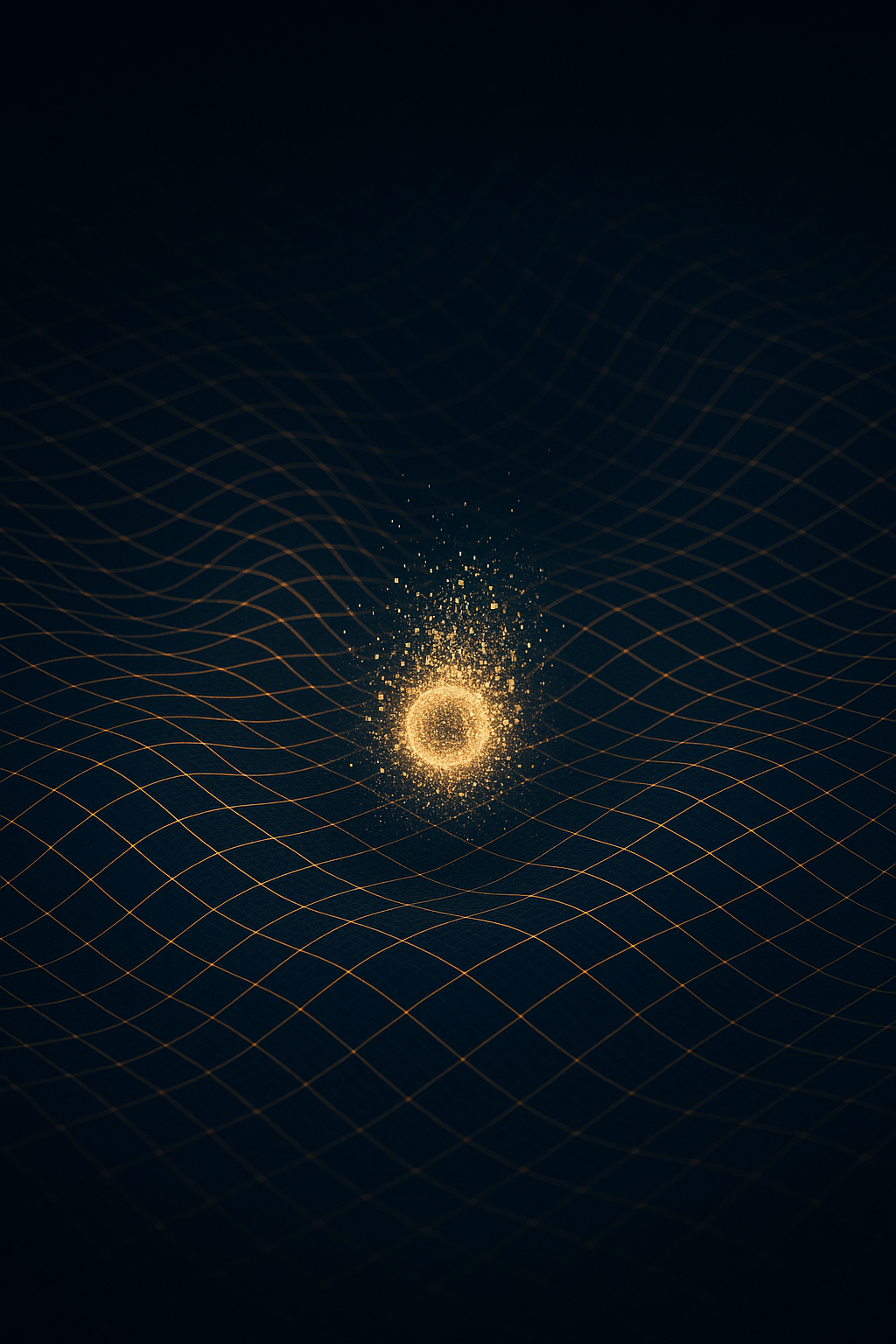
Even at absolute zero (0 K), the geometry of space-time fluctuates. A qubit attempting to maintain coherence is like a house of cards built on an imperceptibly trembling table. Eventually, it falls.
Implications for Quantum Computing
If Lambda Noise is a fundamental constant of universal geometry, then passive isolation (trying to block the noise) has an insurmountable physical limit.
This theory suggests that the future of quantum computing lies not in “freezing” the system, but in understanding the frequency of this fundamental vibration. By mapping Lambda Noise, we can stop fighting against it and start designing architectures that take this vibration into account.
Leave a Reply